 Pensar
Spanish words
Blog
Fruits and vegetables in Spanish
47 fruits and vegetables, each with its el or la, the name people use in Spain, Mexico, Argentina and Colombia, and a sentence you'd actually say at the market.
Every word here is one Pensar teaches, with the level it's taught at, from A1 to B1.
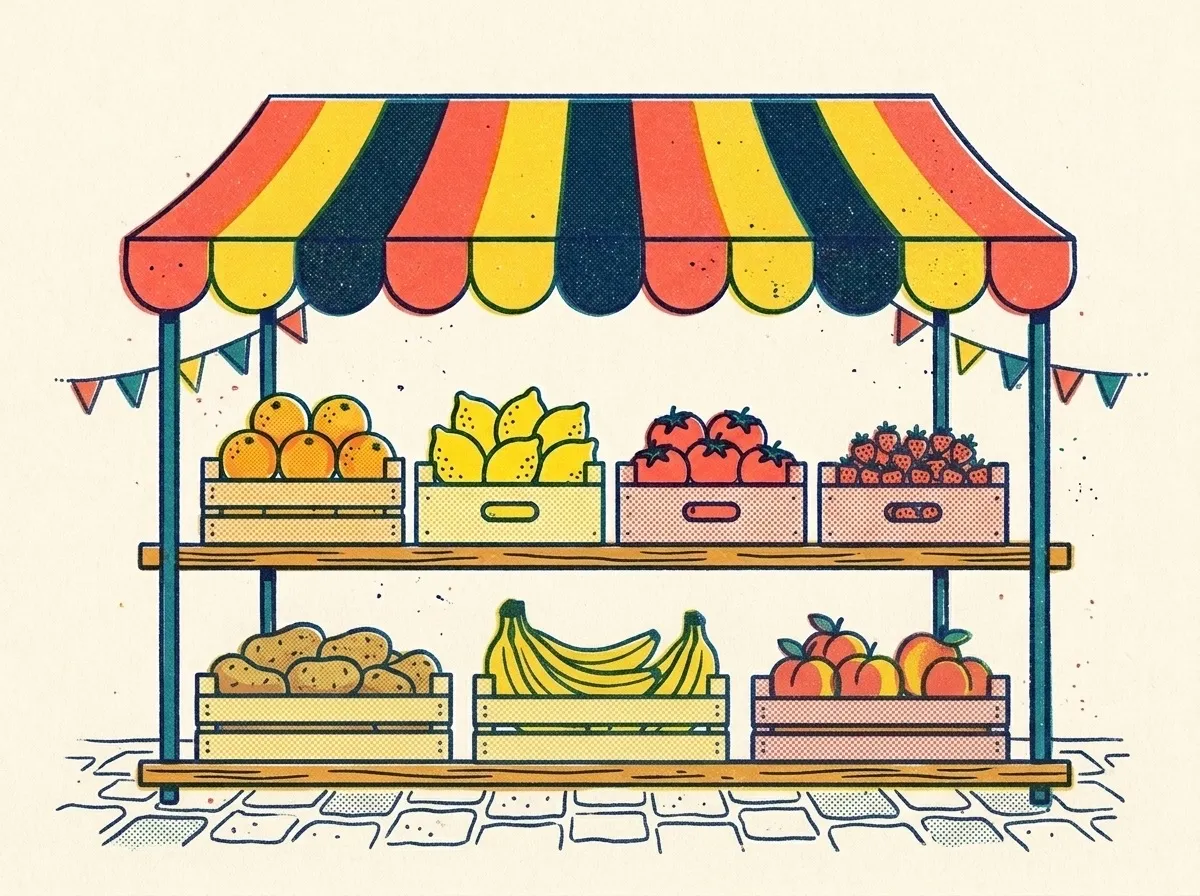

Fruits, las frutas
-
la manzanaA1apple
Quiero una manzana.I want an apple.
-
la naranjaA1orange
Me da un kilo de naranjas.Could I have a kilo of oranges?
-
el plátanoA1banana
- Argentina la banana
- Colombia el banano
Quiero plátano con yogur.I want banana with yogurt.
-
la fresaA1strawberry
- Argentina la frutilla
Quiero helado de fresa.I want strawberry ice cream.
-
la uvaA1grape
Me encantan las uvas.I love grapes.
-
el limónA1lemon
Quiero agua con limón.I want water with lemon.
-
la limaA2lime
El mojito lleva lima.The mojito has lime.
-
la piñaA1pineapple
Me encanta la piña.I love pineapple.
-
la sandíaA1watermelon
La sandía está muy fresca.The watermelon is very cool.
-
el melónA2melon
El melón está muy dulce.The melon is very sweet.
-
el duraznoA2peach
- Spain el melocotón
Quiero un durazno de postre.I want a peach for dessert.
-
la peraA1pear
Quiero una pera.I want a pear.
-
la cerezaA2cherry
Las cerezas están muy ricas.The cherries are delicious.
-
el mangoA2mango
El mango está muy dulce.The mango is very sweet.
-
el aguacateA2avocado
- Argentina la palta
Quiero tostadas con aguacate.I want toast with avocado.
-
la ciruelaA2plum
La ciruela está madura.The plum is ripe.
-
el albaricoqueB1apricot
- Mexico el chabacano
- Argentina el damasco
Compro albaricoques en el mercado.I buy apricots at the market.
-
la frambuesaA2raspberry
Me gustan las frambuesas.I like raspberries.
-
el arándanoA2blueberry
Quiero arándanos en el yogur.I want blueberries in my yogurt.
-
el cocoA2coconut
Me gusta el agua de coco.I like coconut water.
-
el higoA2fig
Los higos están muy dulces.The figs are very sweet.
-
la mandarinaA2tangerine
Quiero una mandarina.I want a tangerine.
-
la granadaB1pomegranate
La granada tiene muchas semillas.The pomegranate has lots of seeds.
-
el kiwiA2kiwi
Quiero un kiwi de postre.I want a kiwi for dessert.
Vegetables, las verduras
-
el tomateA1tomato
La ensalada lleva tomate.The salad has tomato.
-
la papaA1potato
- Spain la patata
Quiero papas con queso.I want potatoes with cheese.
-
la cebollaA1onion
Corto la cebolla para la sopa.I chop the onion for the soup.
-
el ajoA2garlic
La salsa lleva ajo.The sauce has garlic.
-
la zanahoriaA1carrot
El conejo come zanahoria.The rabbit eats carrot.
-
la lechugaA1lettuce
La ensalada lleva lechuga.The salad has lettuce.
-
el pepinoA2cucumber
La ensalada lleva pepino.The salad has cucumber.
-
el pimientoA2bell pepper
- Argentina el morrón
- Colombia el pimentón
Quiero pimiento en la pizza.I want bell pepper on the pizza.
-
el maízA2corn
Me gusta el maíz con mantequilla.I like corn with butter.
-
el brócoliA2broccoli
No me gusta el brócoli.I don't like broccoli.
-
la coliflorA2cauliflower
Hoy hay coliflor con queso.Today there's cauliflower with cheese.
-
las espinacasA2spinach
Me gusta la sopa de espinacas.I like spinach soup.
-
el calabacínB1zucchini
- Mexico la calabacita
- Argentina el zapallito
- Colombia el zucchini
La sopa lleva calabacín.The soup has zucchini.
-
la berenjenaA2eggplant
Hoy hay berenjena con queso.Today there's eggplant with cheese.
-
el champiñónA2mushroom
La pizza lleva champiñones.The pizza has mushrooms.
-
la calabazaA2pumpkin
Hacemos sopa de calabaza.We make pumpkin soup.
-
las judías verdesB1green beans
- Mexico los ejotes
- Argentina las chauchas
- Colombia las habichuelas
Hoy comemos judías verdes con pollo.Today we're eating green beans with chicken.
-
la remolachaB1beet
- Mexico el betabel
La ensalada lleva remolacha.The salad has beet.
-
el apioB1celery
La sopa lleva apio.The soup has celery.
-
el rábanoB1radish
La ensalada lleva rábano.The salad has radish.
-
el puerroB1leek
La sopa lleva puerro.The soup has leek.
-
la alcachofaB1artichoke
Hoy hay alcachofas con jamón.Today there are artichokes with ham.
-
el espárragoB1asparagus
Hoy comemos espárragos.Today we're eating asparagus.
Test yourself
Five words from this page. See the English, say the Spanish out loud, then turn the card over. It's how Pensar practices, and saying it beats rereading it.
-
1 of 5the beetSay it in Spanish, out loud.
Turn it over
la remolacha
La ensalada lleva remolacha.The salad has beet.
- Mexico: el betabel
-
2 of 5the zucchiniSay it in Spanish, out loud.
Turn it over
el calabacín
La sopa lleva calabacín.The soup has zucchini.
- Mexico: la calabacita
- Argentina: el zapallito
- Colombia: el zucchini
-
3 of 5the green beansSay it in Spanish, out loud.
Turn it over
las judías verdes
Hoy comemos judías verdes con pollo.Today we're eating green beans with chicken.
- Mexico: los ejotes
- Argentina: las chauchas
- Colombia: las habichuelas
-
4 of 5the apricotSay it in Spanish, out loud.
Turn it over
el albaricoque
Compro albaricoques en el mercado.I buy apricots at the market.
- Mexico: el chabacano
- Argentina: el damasco
-
5 of 5the avocadoSay it in Spanish, out loud.
Turn it over
el aguacate
Quiero tostadas con aguacate.I want toast with avocado.
- Argentina: la palta
In Pensar, cards like these come back on their own: the shaky ones first, and with the stickers you've cut from your own photos.
Get Pensar on the App StoreThe ones that change by country
These 10 have a different name depending on where you are. Learn the one for the place you'll use your Spanish, and recognize the rest.
| English | Spain | Mexico | Argentina | Colombia |
|---|---|---|---|---|
| banana | el plátano | el plátano | la banana | el banano |
| strawberry | la fresa | la fresa | la frutilla | la fresa |
| peach | el melocotón | el durazno | el durazno | el durazno |
| avocado | el aguacate | el aguacate | la palta | el aguacate |
| apricot | el albaricoque | el chabacano | el damasco | el albaricoque |
| potato | la patata | la papa | la papa | la papa |
| bell pepper | el pimiento | el pimiento | el morrón | el pimentón |
| zucchini | el calabacín | la calabacita | el zapallito | el zucchini |
| green beans | las judías verdes | los ejotes | las chauchas | las habichuelas |
| beet | la remolacha | el betabel | la remolacha | la remolacha |
Pensar
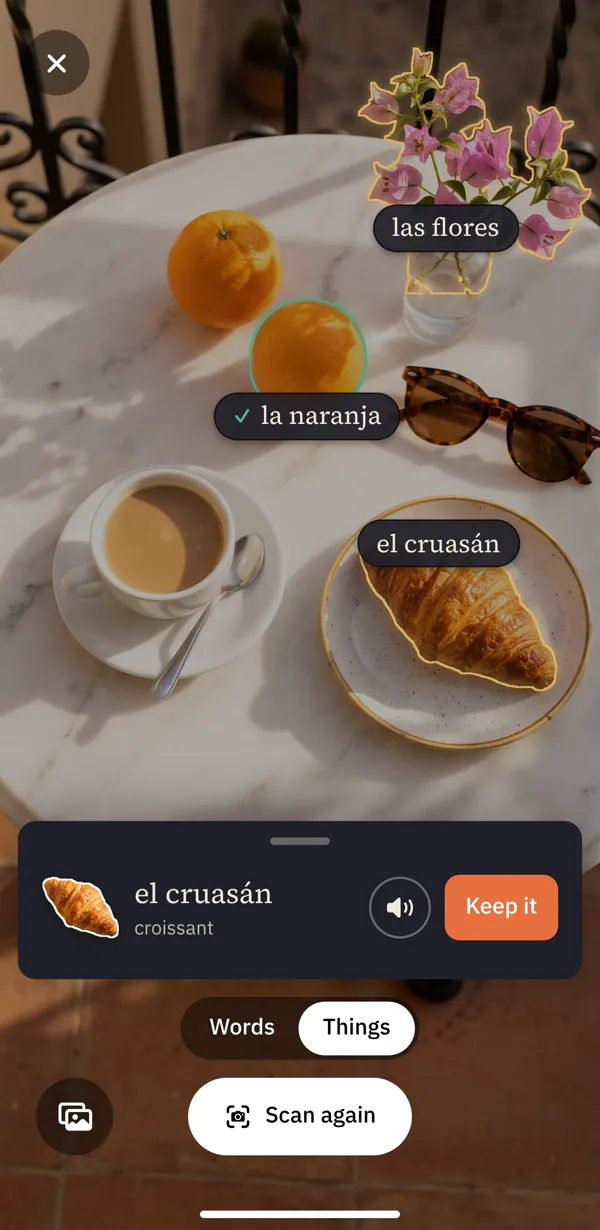
Point your camera at the fruit bowl
Pensar's camera names what's in front of you in your Spanish, cuts each thing out as a sticker, and brings it back as a picture card: ¿Qué es? Say it, then turn it over.

Coming soon to iPhone and iPad
First lesson free. No ads. No account needed to start. See what Pensar does.
Questions people ask
How do you say fruits and vegetables in Spanish?
Las frutas y las verduras. You'll also hear las hortalizas for vegetables from a garden, and los vegetales in much of Latin America.
Is it el plátano or la banana?
Both, depending on where you are. Spain and Mexico say el plátano, Argentina says la banana and Colombia says el banano. In Colombia, el plátano is the plantain you cook.
Why is a strawberry la frutilla in Argentina?
It's simply the local name. Spain, Mexico and Colombia say la fresa; Argentina, Uruguay and Chile say la frutilla. Everyone understands la fresa, so it's a safe default.